
The Magnetic Revolution: Why 2025’s Qi2 Power Banks Are the Essential Upgrade You Need
The era of fumbling with charging cables and waking up to a misaligned, dead phone is over. In 2025, magnetic charging has evolved from a niche Apple feature to a universal, high-speed standard.
The era of fumbling with charging cables and waking up to a misaligned, dead phone is over. In 2025, magnetic charging has evolved from a niche Apple feature to a universal, high-speed standard. The adoption of Qi2 has made “snap-on” power the fastest, most convenient way to keep your devices charged on the go. Whether you’re commuting, travelling, working remotely, or simply moving through your day, the frustration of tangled cables, slow charging, and unreliable connections is finally a thing of the past.
Imagine this: you reach for your phone in your pocket, it clicks securely onto a slim power bank with a satisfying magnetic snap, and charges at full speed while you continue texting, navigating, or streaming. No more stopping to plug in, no more hunting for a cable, and no more worrying about alignment. This is the reality of 2025, and it’s powered by the new generation of Qi2-certified magnetic power banks.
What is MagSafe, Qi2, and the Magnetic Charging Advantage?
Magnetic charging systems, originally pioneered by Apple’s MagSafe, use an array of internal magnets to perfectly align the phone’s charging coil with the charger’s coil. This perfect alignment is the secret sauce. It ensures maximum energy transfer, eliminates wasted power, and enables faster, more consistent charging speeds than ever before.
Apple introduced MagSafe with the iPhone 12 in 2020, revolutionising wireless charging by adding a ring of magnets behind the phone’s back glass. This allowed accessories like chargers, wallets, and mounts to snap into place with precision. But for years, this technology remained exclusive to Apple devices. That changed with the launch of Qi2, the new global wireless charging standard developed by the Wireless Power Consortium (WPC).
Qi2 incorporates the same magnetic alignment technology from MagSafe but makes it open to all manufacturers. This means Android phones, accessories, and power banks can now use the same snap-on, high-speed charging system. The result? A unified, cable-free charging ecosystem that works seamlessly across iPhone, Samsung, Google Pixel, and other Qi2-compatible devices.
| Feature | MagSafe (Apple Standard) | Qi2 (Universal Standard) |
|---|---|---|
| Foundation | Apple’s proprietary magnetic system. | Open standard based on MagSafe’s technology. |
| Charging Speed | Up to 15W (on older iPhones), or 25W on the latest models (e.g., iPhone 17). | Up to 15W standard, with newer power banks offering 25W output. |
| Compatibility | Exclusively for iPhone 12 and newer. | Universal: Works with iPhones (12+), and compatible Android devices. |
As you can see, while MagSafe remains Apple’s branded version, Qi2 is the future-proof, cross-platform solution. And in 2025, Qi2 power banks are leading the charge, literally, with improved efficiency, stronger magnetic hold, and smarter features like pass-through charging and real-time battery monitoring via apps.
Why is Magnetic Alignment Needed?
Traditional wireless charging (Qi) relies on you manually placing the phone perfectly on the pad. If the phone moves even slightly, which it often does in a pocket or bag, charging slows down or stops altogether, leading to wasted energy and a slow charge. This misalignment is the number one reason people give up on wireless charging. Studies show that up to 30% of energy can be lost due to poor coil alignment in standard Qi setups.
Qi2 and MagSafe solve this by magnetically locking the connection, guaranteeing optimal efficiency and top speed every time. The magnets ensure the charging coils are aligned within millimetres, every single time you attach your phone. This means:
- Charging starts instantly, no fiddling required
- Full 15W or 25W speed is consistently delivered
- Less heat buildup from inefficient energy transfer
- Longer battery lifespan due to reduced thermal stress
- Freedom to use your phone while it charges, hands-free
In real-world use, this means you can snap your phone onto a power bank in your bag and keep walking. Or attach it to a car mount that doubles as a charger. Or place it on your desk and pick it up without disconnecting. The magnetic bond is strong enough to hold through movement but releases easily when you want to grab your phone.
Real-Life Scenarios: When Magnetic Charging Beats Cables
While wired charging will always have its place for maximum speed, magnetic Qi2 power banks shine in everyday situations where convenience, safety, and mobility matter more than raw wattage. Here are four real-world examples where MagSafe/Qi2 is clearly superior to traditional cables:
1. Commuting on Public Transport
You’re standing on a crowded train, holding the rail with one hand and your phone in the other. You need to top up your battery before your stop. With a cable, you’d have to juggle plugging in, manage the dangling wire, and risk it snagging or pulling out. With a magnetic power bank, you simply pull it from your pocket, snap it to the back of your phone, and keep scrolling, navigating, or texting. The connection stays secure even if the train jolts, and you can detach it instantly when your stop arrives, no unplugging required.
2. Charging While Using Your Phone as a Remote or Controller
You’re at home, using your iPhone or Android as a remote for your smart TV, or playing a mobile game with on-screen controls. A cable would restrict movement, get in the way of your grip, or tug at the port. A magnetic power bank attaches flat to the back, adds minimal bulk, and lets you hold and use your phone naturally. The weight is balanced, the connection is stable, and you can game or browse for hours without interruption.
3. Outdoor Adventures or Cycling
You’re cycling, hiking, or running with your phone mounted on handlebars or in a running belt. A cable would bounce, disconnect, or wear out the port from vibration. A Qi2 magnetic power bank locks on securely, survives bumps and sweat, and keeps charging even in motion. Many models are IP65 dust and water-resistant, making them ideal for active lifestyles where cables fail fast.
4. Shared Charging in Cafes or Airports
You’re in a busy cafe or airport with limited outlets. You finally snag a seat near a power socket, but the cable is short, or someone else needs it. With a magnetic power bank, you charge your phone on the go, then snap it onto a friend’s phone to share power, no cable swapping needed. It’s hygienic, fast, and eliminates the “cable tug-of-war” at public charging stations.
Which Phones Benefit the Most?
- iPhone Users (iPhone 12 through iPhone 17 Series): These phones have the magnets built in. Any MagSafe-certified or Qi2 power bank will snap on and charge reliably at 15W, with the latest iPhone 17 models supporting up to 25W from compatible, high-speed Qi2/MagSafe power banks.
- Android Users (Newer Devices): The open Qi2 standard is being rapidly adopted by Android manufacturers. Newer flagship Android phones are increasingly coming with native magnetic alignment built-in, allowing them to use the same fast 15W/25W Qi2 power banks as iPhones.
- Older Android/Non-Magnetic Phones: You can easily add magnetic charging by using a MagSafe-compatible case or an adhesive magnetic ring, bringing the convenience and perfect alignment to almost any device.
Why You Need a Magnetic Power Bank in 2025
The magnetic power bank is now the most practical daily charger for two simple reasons:
- True Portability: It completely eliminates the cable hassle. You can use your phone to text, game, or take a call while charging, without the cable getting in the way or the power bank slipping off.
- Speed Parity: With the jump to 15W and 25W Qi2, the wireless speed is now virtually the same as traditional fast-wired charging for many top-up scenarios, meaning you don’t sacrifice speed for convenience.
Beyond convenience, magnetic power banks are safer. The secure connection reduces wear on charging ports, and many models include advanced safety features like overcharge protection, temperature control, and foreign object detection. They’re also more versatile, many double as phone stands, attach to metal surfaces, or work with car mounts.
4 of The Best MagSafe & Qi2 Power Banks of 2025
There are dozens of magnetic power banks in 2025. These four stand out for speed, reliability, design, and real-world performance. Whether you want blazing 25W wireless charging, ultra-slim portability, rugged utility, or smart integration, there’s a perfect snap-on solution below.
1. UGREEN MagFlow Qi2 – The Speed King

The fastest magnetic power bank available today. Delivers a full 25W Qi2 wireless charge, future-proof for iPhone 17 and high-speed Qi2 Androids. Perfect for power users who refuse to compromise on speed.
Standout Features:
- 25W Qi2 certified wireless output
- 10,000mAh capacity with 30W+ USB-C PD
- Strongest magnetic hold in its class
- Premium aluminum build, LED power indicator
2. Anker MagGo Ultra-Slim – The Everyday Hero
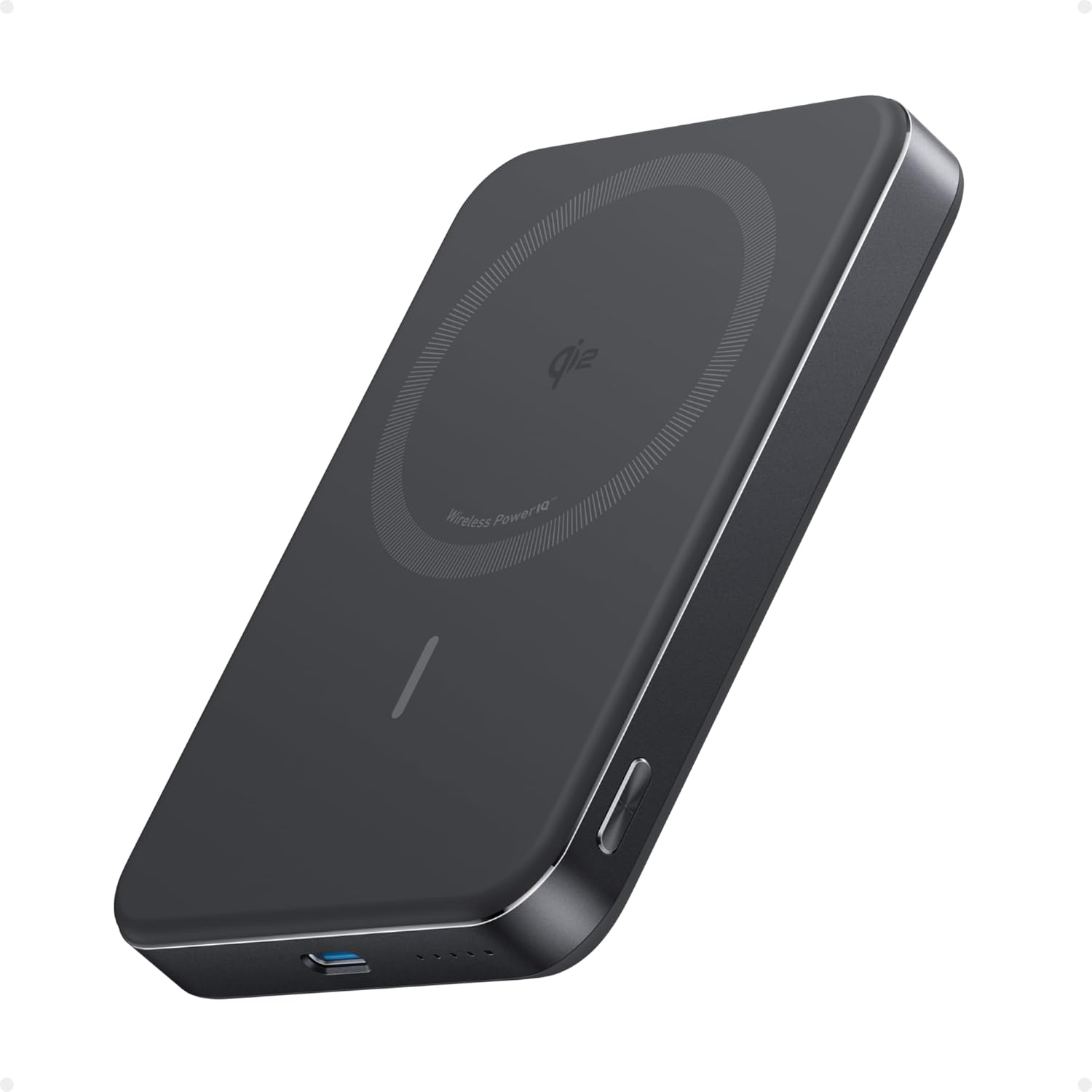
The perfect balance of slim design, smart features, and reliable 15W charging. With a foldable kickstand and color display, it’s the one you’ll actually carry every day.
Standout Features:
- Ultra-thin 12.8mm profile
- 15W Qi2 wireless + 20W USB-C
- Built-in kickstand + smart LED display
- Anker’s legendary safety tech
3. EcoFlow RAPID Mag – The Powerhouse

Built for adventurers and multi-device users. Charges phones magnetically while delivering 65W+ to laptops via USB-C. Rugged, reliable, and ready for anything.
Standout Features:
- 65W USB-C PD for laptops & tablets
- 7.5W magnetic wireless (upgradable)
- IP65 dust/water resistance
- EcoFlow app integration
4. Xiaomi 33W Magnetic – The Smart All-in-One

No extra cables needed. Built-in retractable USB-C cable + magnetic wireless pad. Fast 33W wired charging and Xiaomi’s seamless ecosystem integration at a budget-friendly price.
Standout Features:
- Built-in foldable USB-C cable
- 33W wired + 7.5W magnetic
- Works with Xiaomi HyperOS devices
- Affordable and compact
Q&A: Magnetic Power Bank Essentials
Is MagSafe and Qi2 the same thing?
Not quite, but they are fully compatible. MagSafe is Apple’s specific implementation. Qi2 is the universal standard developed by the industry (WPC) that incorporates the magnetic alignment feature from MagSafe. A certified Qi2 power bank works seamlessly with MagSafe iPhones.
Does magnetic charging heat up my phone?
All wireless charging generates some heat. However, the perfect alignment provided by MagSafe and Qi2 significantly reduces misaligned charging (the main cause of excessive heat) compared to older, non-magnetic Qi pads. Reputable brands like Anker and UGREEN also build in advanced thermal management to protect the battery.
Should I buy a 5,000mAh or 10,000mAh magnetic power bank?
5,000mAh: Best for daily use, minimal bulk. It provides about a full charge for a standard iPhone.
10,000mAh: Best for heavy users or travel. It can charge a phone 1.5 to 2 times, but it is noticeably thicker and heavier.
If a power bank says 25W, will my older iPhone charge at 25W?
No. Your phone’s software and hardware dictate the maximum input. An older iPhone (12–15 series) will max out at 15W wirelessly. The 25W is future-proofing, allowing the faster speed for the newest iPhone 17 or high-speed Qi2 Android devices.
Conclusion: The Future is Snapped On
The second half of 2025 officially marks the year when magnetic power banks transitioned from a luxury to a smart necessity. Thanks to the universal adoption of Qi2 and the race toward 25W wireless charging, you no longer have to choose between speed and convenience. The perfect alignment of a magnetic power bank ensures you get the fastest possible charge without a single snagging cable, making them the superior choice for staying powered up in a highly mobile world.
Looking for different types of Power Banks?
Unlock ultimate freedom with the latest power banks, powering everything from your phone and laptop to your essential outdoor gear.
Explore All The Best Power Banks